Best Home Saunas for Apartments and Small Spaces UK 2025
If you live in a flat, you've probably assumed a home sauna isn't possible. Most sauna cabins require a dedicated corner and 1.5–2 metres of floor space. But the market has shifted. Smaller 1-person models, corner-fit designs, and infrared sauna blankets now make it feasible to own one even in a compact London studio or Manchester terrace.
The catch: apartments come with constraints that houses don't. Electrical load, moisture management, and noise all matter more when neighbours are 30 centimetres away through a shared wall. This guide covers what actually works in limited space, with real floor dimensions so you can measure your room properly.
Compact Barrel Saunas: 1-Person Cabins
Traditional barrel saunas, once exclusive to gardens, now come in single-occupant sizes. These are wooden cylinders, roughly 1.2m long × 0.9m diameter, sitting upright or on their side.
Floor footprint: Around 90cm × 90cm (when positioned upright on their end). They're genuinely compact—narrow enough to fit between a bedroom wall and wardrobe. The height is typically 1.1–1.3m, so ceilings above 2.4m are safe.
The reality: You're lying or crouching inside. The experience is intimate rather than luxurious. Most use electric heaters (3–6 kW), which means you'll need a dedicated circuit—call an electrician to check capacity before buying. They do get hot; 1-person barrels reach 70–80°C easily. The wood develops a lovely patina over time, though maintenance involves regular oiling.
Apartment concerns: Some flats prohibit them because of moisture and heat. Check your lease. Condensation is real—you'll need to crack a window or install a small extractor fan. Sound is minimal (just the heater), so neighbours won't complain about noise.
Cost: £2,500–£4,500 for a decent timber model.
Corner-Fit Sauna Cabins: Flat-Friendly Designs
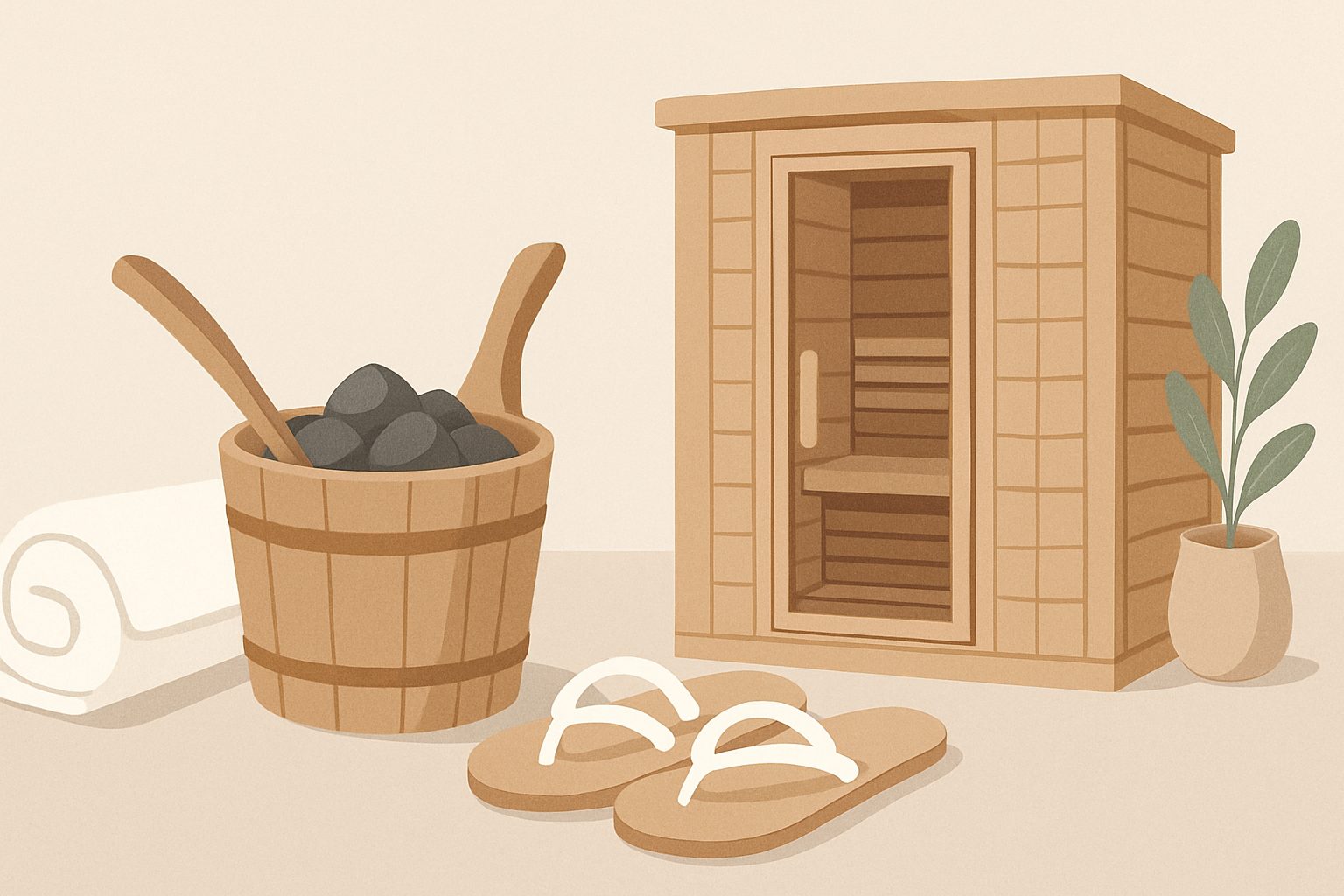
Several UK manufacturers now sell angular sauna cabins designed to slot into room corners rather than sit in the middle of the floor.
A typical corner cabin takes a 1m × 1m (100cm × 100cm) floor footprint—barely larger than a wardrobe. Height ranges from 1.9–2.1m, which works in most flats (just check ceiling height first). The door opens inward, so you need 60cm clearance in front to step in comfortably.
Build quality varies. Budget models (£1,500–£2,000) use thin acrylic or pine with basic electric heaters. Mid-range (£2,500–£4,000) feature better insulation, premium wood, and more reliable heating elements. Both work, but insulation makes a real difference—a thin-walled cabin wastes energy and takes 20 minutes to warm up instead of 10.
Electrical load is important. Most corner cabins draw 3–4 kW, which is fine on a standard 16A circuit if nothing else is running. Larger models need 6 kW and a dedicated supply. Ask the supplier; they'll tell you honestly.
Moisture and ventilation: A small window (often just 20cm × 20cm of glass) lets you see out, but you still need air circulation. Leave the cabin door open for 10 minutes after use, or your bedroom becomes stuffy. Some buyers install a timed extractor fan above the cabin—a worthwhile addition in humid flats.
Best for: Flat-dwellers who have a spare corner, good ceiling height, and stable electricity supply.
Sauna Blankets: No Space Required
If floor space is genuinely non-existent, sauna blankets (infrared sleeping bags) deserve consideration. You lie inside a heated fabric blanket for 30 minutes. They're portable, fold into a cupboard, and need only a power socket.
Dimensions: When flat on the bed, they're roughly 70cm × 180cm—similar to a sleeping bag. No permanent installation.
What they do: Infrared heat penetrates skin more efficiently than air-based saunas. Temperature is lower (40–60°C), so it feels less intense, but sweating is genuine. They're popular for recovery and relaxation rather than the full sauna ritual.
Honest assessment: They're convenient, but they're not a traditional sauna. You're lying in a bag, not sitting in a wooden room breathing hot air. Some people love them; others find them claustrophobic. Cost is low (£200–£600), so the risk is minimal if you want to try before committing to a cabin.
Electrical: Plug directly into a standard socket. No extra wiring needed.
Key Dimensions to Check Before Buying
Before you buy anything, measure your space:
- Floor space: Measure from wall to wall where the sauna will go. Account for the door swing (at least 60cm clearance in front).
- Ceiling height: Sauna cabins and barrels usually sit 1.9–2.1m tall. You need at least 10cm clearance above.
- Wall access: Will you need to carry the sauna through doorways or down a hallway? Know the narrowest width it needs to pass through.
- Electrical location: Find the nearest socket. Most saunas need 3–4 metres of cable at most. If your nearest socket is 10 metres away, running cable is messy.
What Works Best for Apartments
A corner cabin is the sweet spot for most flat-dwellers. It sits in a spare corner, heats efficiently, and uses standard electrics if you're sensible. Barrel saunas work if you have space, but they're harder to integrate into a living room. Sauna blankets suit people who want the wellness benefit without commitment or are renting and can't install anything permanent.
The real consideration isn't space—it's whether your landlord or building management allows it. Moisture, heat, and electrical load worry them. Prove it's safe: get an electrician's sign-off, show a ventilation plan, and start with a trial period. Most landlords relent once they see it's not causing problems.
More options
- Infrared Sauna Cabin (1–2 Person) (Amazon UK)
- Far Infrared Sauna Blanket (Amazon UK)
- Electric Sauna Heater (Harvia / Huum) (Amazon UK)
- Home Sauna Kit / Cabin Flat-Pack (Amazon UK)
- Sauna Accessories Bundle (Ladle, Bucket, Thermometer) (Amazon UK)