Best Home Saunas Under £1,000 UK — Affordable Picks That Actually Work
Finding a decent home sauna without spending a fortune is entirely possible, though you'll need realistic expectations about what £1,000 gets you. The sweet spot at this budget is plug-in infrared cabins and compact barrel designs—both deliver genuine heat therapy without requiring building work or electrical installation by a professional.
What £1,000 Actually Buys You
Under a grand, you're looking at infrared saunas rather than traditional Finnish dry saunas. This matters because infrared models are cheaper to manufacture, need less insulation, run on standard household electrics (13A plug), and heat up faster. A traditional sauna at this price would be cramped and poorly insulated.
Infrared saunas work differently to conventional ones. Instead of heating the air, infrared panels emit radiant heat that warms your body directly. They reach useful temperatures (typically 50–60°C) in 15–20 minutes rather than the 30–45 minutes a traditional sauna needs. Most users find them genuinely relaxing, though some prefer the hotter, drier experience of a Finnish sauna.
One-Person Cabin Saunas (£600–£950)
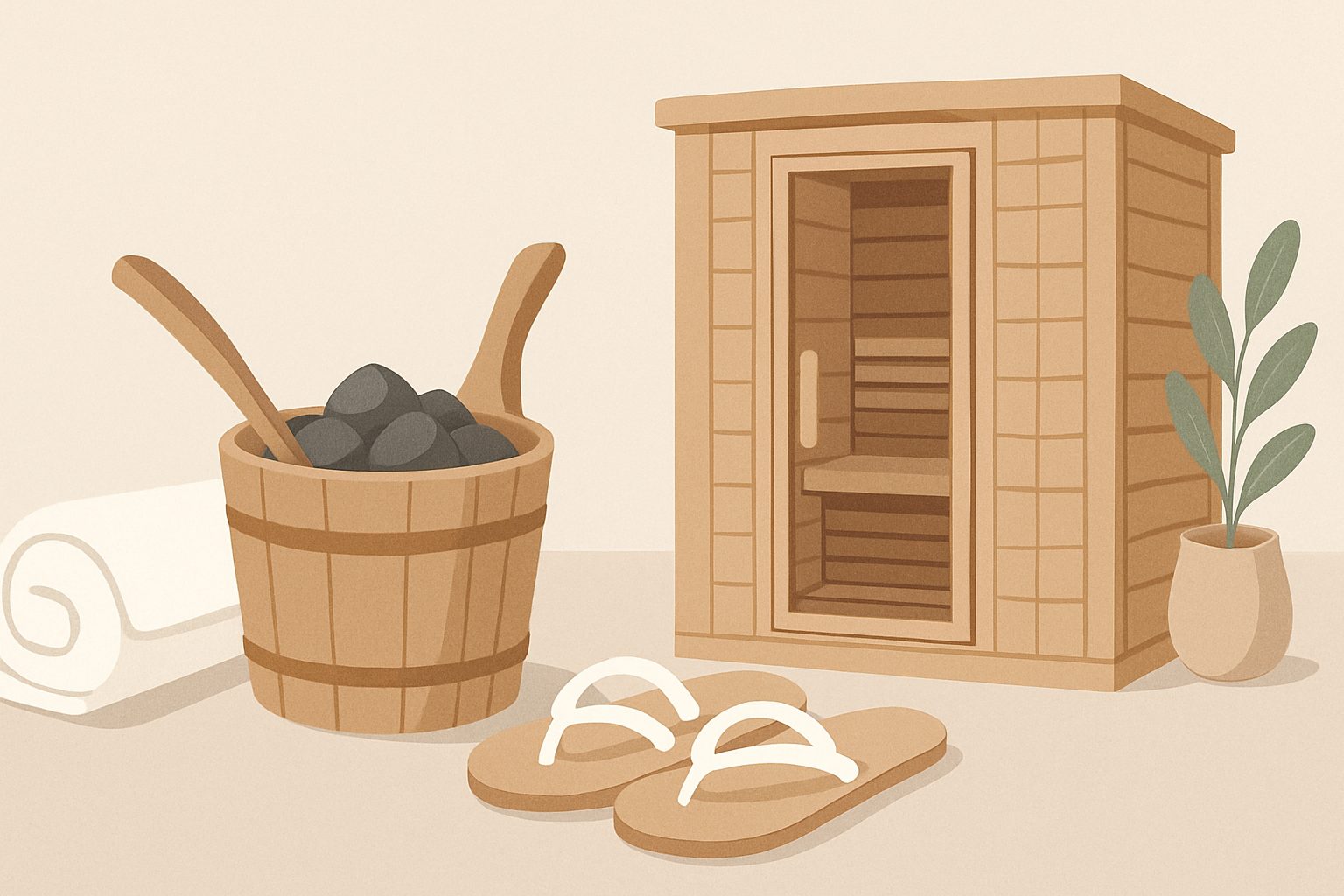
This is the most common option in the budget range. You'll find these as wooden-box cabins roughly 700mm deep, 900mm wide, and 1,200–1,300mm tall—essentially a standing booth that fits a single adult. Brands like Finnleo, Harvia, and various Chinese manufacturers flood this category.
What to expect: Tempered glass door, basic interior bench, a wall-mounted heater with digital controls, sometimes pre-wired LED lighting. Assembly takes 2–4 hours and usually requires a second pair of hands. Most come flat-packed.
The honest bit: Interior materials vary wildly. Better models use proper hemlock or spruce wood; cheaper ones use plywood or dense fibreboard that can warp if moisture escapes around the door seal. The difference in durability is substantial—a £650 unit might last 5–7 years with monthly use, while a £900 model can go 10+.
Heater quality matters too. Cheap carbon-fibre heaters take longer to warm up and cool down faster when you step out. Better far-infrared heaters distribute heat more evenly and maintain temperature more efficiently. Avoid units with suspiciously low wattage (under 1.5kW) unless you're genuinely tiny—they'll struggle to reach comfortable temperatures.
Barrel and Pod Designs (£750–£1,000)
Wooden barrel saunas and modern pod designs offer more aesthetic appeal and sometimes better insulation than flat cabins. A barrel sauna is essentially a wooden cylinder (around 1.2–1.5m long) that you sit inside; modern pods are similar but with rounded or curved walls.
Advantages: They look intentional in your garden or home, insulate reasonably well, and the curved design feels less claustrophobic than a tight booth. Some barrel models let you prop open the door fully for ventilation.
Disadvantages: Most still need an electrical connection, and the smaller ones don't offer significantly more space than cabin models. Maintenance is higher—wood needs occasional sealing, and barrel designs are trickier to clean inside.
If you go this route, check whether the heater is mounted inside (takes up space) or outside the barrel. Exterior-mounted heaters are genuinely better for usable interior space.
Space and Installation
One-person cabins fit almost anywhere—a corner of a bedroom, ensuite, basement, or shed. You need a standard 13A power socket within a few metres. Running an extension cable to the sauna is fine, but make sure it's rated for the heater's wattage.
Barrel saunas work outdoors too, though they're less practical indoors unless you have a dedicated utility space. Wind and cold weather do affect how efficiently they maintain temperature.
Running Costs
An infrared sauna drawing 1.5–2kW for an hour costs roughly 35–50 pence in electricity (at current UK rates). Regular users might spend £2–3 weekly. Not negligible, but not expensive enough to rule out budget models.
The Quality Trade-Off
At £1,000, you're genuinely choosing between "nice enough for occasional use" and "reliable enough for two-three times weekly." A £700 cabin works perfectly well for someone using it fortnightly. Someone wanting daily sessions should stretch to £1,200+ or accept the higher maintenance burden on a cheaper unit.
Common issues with budget models include heater thermostat drift (temperature creeps upward over time), door seals degrading after a year, and wood splitting in dry conditions. None of these are deal-breakers, but they're not problems you'd expect in a £2,000+ sauna.
What Actually Matters for Reliability
Look for units with real hemlock or spruce (not plywood), far-infrared heaters with digital thermostats rather than analog ones, and doors with decent rubber gaskets. Better manufacturers provide proper warranty documentation and don't sell exclusively through Amazon—that's not a perfect rule, but mainstream retailers tend to stock models with fewer defects.
Check delivery carefully. Many budget saunas ship from abroad, and broken heater elements or split panels on arrival are common. Reputable UK stockists usually handle returns more smoothly than third-party sellers.
The Bottom Line
A £1,000 sauna will work, genuinely. You'll feel the heat, relax, and enjoy the experience. The question is reliability and longevity. If you're buying to test whether you actually like sauna therapy, a mid-range cabin (£750–£850) makes sense. If you're confident you'll use it regularly, saving for something better is usually the smarter choice.
More options
- Infrared Sauna Cabin (1–2 Person) (Amazon UK)
- Far Infrared Sauna Blanket (Amazon UK)
- Electric Sauna Heater (Harvia / Huum) (Amazon UK)
- Home Sauna Kit / Cabin Flat-Pack (Amazon UK)
- Sauna Accessories Bundle (Ladle, Bucket, Thermometer) (Amazon UK)