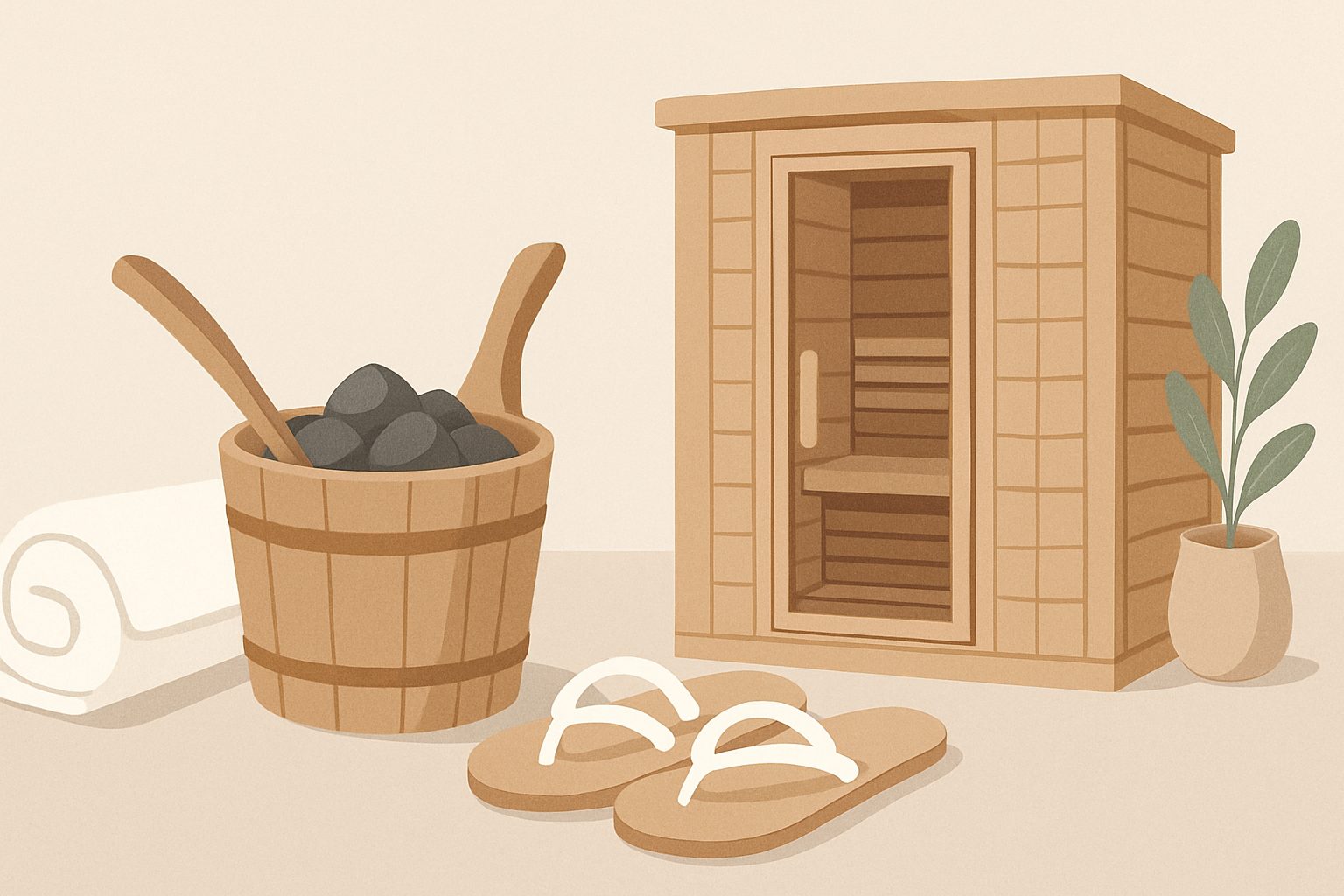
Best Plug-and-Play Home Saunas UK — No Electrician Required
If you rent your home or simply can't face the disruption of installing hardwired electrics, a plug-in sauna cabinet bypasses the need for an electrician entirely. You unbox it, position it, plug it into a standard wall socket, and it works. No circuit upgrades, no building control approval, no cables running through your walls. For UK buyers, that's a significant selling point—but the trade-off is power limitations and slightly longer heat-up times. Understanding what those actually mean for daily use will help you decide if a plug-in sauna is right for you.
Why the Plug-and-Play Model Matters
The infrared sauna market in the UK has traditionally been dominated by hardwired units requiring 32A or 40A circuits, which means calling an electrician and budgeting for installation costs that often exceed £500. That barrier keeps saunas out of reach for renters and anyone in a listed building, conservation area, or leasehold property where wiring work requires freeholder consent.
Plug-in infrared cabins—typically one-person or two-person models—operate on standard 13A (3 kW) or 16A (3.6 kW) circuits. A 13A plug fits into any UK wall socket; a 16A requires a dedicated outlet (often already present in kitchens). That accessibility has opened the market significantly. You're no longer choosing between a £3,000+ hardwired sauna and nothing.
Understanding Power Supply: 13A versus 16A
A standard UK wall socket is 13A, supporting up to 3 kW. Most compact infrared cabins designed for plug-in use stay within this limit, meaning they'll work in any room with a decent socket and adequate ventilation.
A 16A circuit delivers 3.6 kW—roughly 20% more power, which translates to faster heat-up and more consistent temperatures, especially in larger one-person or two-person cabins. If your home has a 16A outlet (many kitchens do, dedicated for cookers or ovens), a 16A sauna uses it efficiently. If not, you're back to 13A.
The practical difference: a 13A cabin takes 30–40 minutes to reach therapeutic temperature (around 60°C), whilst a 16A model reaches the same in 20–25 minutes. For regular users, that matters. For occasional use, the trade-off is usually acceptable.
Avoid units claiming to work on 13A but drawing significantly more power on the sly—they'll either trip your circuit breaker mid-session or pose a fire risk. Check the specification sheet, not just marketing copy.
Heat-Up Time and Real-World Performance
Plug-in infrared saunas use ceramic or carbon heaters positioned along the cabin walls and floor. Because they're smaller and lower-powered than hardwired cabins, they take longer to warm the interior.
A one-person plug-in cabin typically reaches usable heat (45–55°C) in 15–20 minutes, but most people wait until 60°C or higher for therapeutic benefits. That's 25–40 minutes depending on power (13A or 16A), ambient temperature, and how well the cabin is insulated.
Two-person cabins heat more slowly due to larger volume. Expect 35–50 minutes to reach 60°C on a 16A circuit.
This isn't a drawback—it's just the reality of the physics. If you're used to traditional wet saunas, where you step into an already-hot room, the wait might feel long. If you're used to heating your home or running a bath, it's comparable. Many users plan a sauna session around the heat-up time rather than expecting instant gratification.
Safety Standards to Check
UK plug-in infrared cabins should carry CE marking and ideally comply with EN 60335 (electrical safety for household appliances). Look for units that have been through UK third-party testing—not just CE marked in a box without substantiation.
A few manufacturers offer optional timers with automatic shut-off, which is genuinely useful. Sessions lasting longer than 20–30 minutes are uncomfortable anyway, and auto-off prevents oversights if you forget you're inside.
Ventilation is critical. Plug-in cabins are small, enclosed spaces, and poor air circulation can lead to overheating or CO₂ buildup. Check that the model has air vents designed properly—not just small holes that don't actually move air. Some cabins include a quiet extraction fan; others rely on passive vents. If the cabin is in a poorly ventilated room, passive vents alone may not be adequate.
Stability matters too. A one-person cabin is tall and narrow—if it's not well braced, it can topple. Cheaper units sometimes skip proper foot design or internal bracing. Test reviews often pick up on this, but it's worth asking the retailer about cabinet construction before buying.
What to Expect from a Plug-In Sauna
Most plug-in infrared cabins cost between £800 and £2,200 for a decent one-person model. Two-person variants are rarer and tend to cost £2,000–£3,500 because they require more heater panels and power capacity (often 16A only).
Maintenance is minimal: wipe down the interior after use to manage sweat and dust, and ensure airflow is clear. The cabin itself doesn't require servicing if it's assembled correctly. Heater panels typically last 5–10 years with normal use.
You'll need a socket within reach and adequate space—most one-person cabins are roughly 1 metre wide and 1.2 metres deep. A corner of a bedroom, spare room, or utility space works well.
The Honest Limitation
Plug-in saunas are genuinely convenient and genuinely work. But they are lower-powered than hardwired units. If you have access to a hardwired option and don't have installation constraints, a 32A or 40A sauna will heat faster, run hotter, and last longer. If you're renting, in a conservation area, or simply don't want the upheaval, a plug-in cabinet is a sensible compromise—not a second-rate choice, just a different one with real trade-offs that suit some homes and budgets far better than others.
More options
- Infrared Sauna Cabin (1–2 Person) (Amazon UK)
- Far Infrared Sauna Blanket (Amazon UK)
- Electric Sauna Heater (Harvia / Huum) (Amazon UK)
- Home Sauna Kit / Cabin Flat-Pack (Amazon UK)
- Sauna Accessories Bundle (Ladle, Bucket, Thermometer) (Amazon UK)